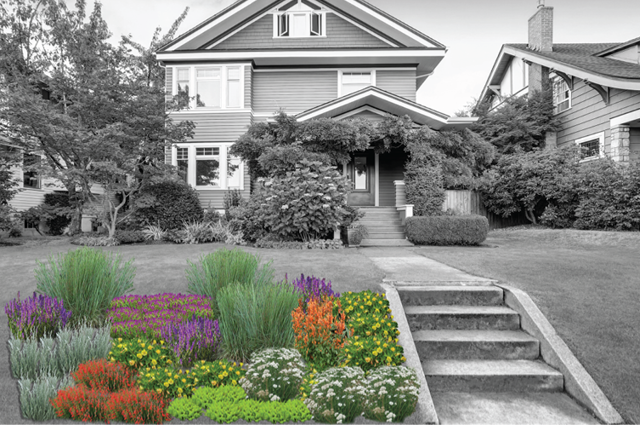
With spring just around the corner, now is the perfect time to begin making new garden plans! With seven full-sized Garden In A Box options this year, we have kits suitable for a wide range of sun and shade exposure, as well as unique situations, such as high elevations or sloped yards. Read on for some garden recommendations, and be sure to sign up for the 2024 Interest List to be notified when garden pre-sale begins in early March!
Best Option for High Elevations:
Golden Hour is an excellent choice for folks residing in the mountains and at higher elevations. Every plant in this collection is hardy to at least 7,500ft, with many hardy up to 9,000ft. Although this garden is geared towards higher elevations, it would thrive equally well along the Front Range.
Best Option for Planting on a Slope:
Eyeing a sloped area in your yard for planting? The Sunny Slope garden was designed for those tricky inclines where growing grass or other plants is challenging. The perennials are strategically organized by water needs, with drought-tolerant plants positioned at the top and those with adaptable water needs arranged at the bottom.
Best Option for a Shaded Yard:
For yards that receive a lot of shade from trees or structures, we have three shade-friendly options this year. The Mountain Moonlight garden, covering 60 square feet with 15 part-shade plants, draws inspiration from the dusky glow of moonlight. Our popular Colorado Oasis garden is also comprised of adaptable plants for a mix of shade and sun. If your planting area is larger, consider the Native Shadows garden, a 100 square foot, adaptable choice for larger shaded spaces.
Determining Sun Exposure:
Understanding your yard’s sun exposure is vital to selecting plants that will thrive. Our gardens are categorized into Full Sun, Part Shade, or Adaptable. But what do these designations mean?
- Full sun: Requires a minimum of 6 hours of direct sun per day.
- Adaptable: Needs a minimum of 4 hours of direct or indirect sun per day.
- Part shade: Requires no more than 4 hours of direct or indirect sun per day.
Por «sol directo» nos referimos a la luz solar que incide sin ningún obstáculo sobre el jardín. El «sol indirecto» es la luz solar que se ve obstaculizada de alguna forma antes de llegar a las plantas, por ejemplo, a través de las hojas de los árboles.
Para determinar la exposición al sol de tu jardín:
- Observa la zona de plantación a lo largo del día. Toma nota de los momentos en los que recibe luz solar directa, luz solar indirecta y sombra total.
- Ten en cuenta los árboles que echan hojas durante las estaciones más cálidas y que dan sombra.
- Ten en cuenta que, naturalmente, habrá más luz solar durante la temporada de siembra y crecimiento —cuando los días son más largos— que en invierno y a principios de primavera. Por lo tanto, cuanto más avanzado esté el año cuando evalúes la exposición solar de tu zona, mejor.
Ten en cuenta también que la intensidad del sol de la tarde puede diferir significativamente de la del sol de la mañana o del atardecer. A la hora de planificar tu jardín, el momento del día en que incide la luz solar es tan importante como la duración de la exposición a la misma. El sol de la tarde en Colorado, especialmente durante el verano, puede ser intenso. Las plantas de pleno sol prosperan bajo el sol intenso de la tarde, así que asegúrate de que reciban esta luz solar directa, sobre todo entre el mediodía y las 16:00. Por el contrario, a las plantas de semisombra les puede resultar demasiado intenso el sol de la tarde y preferirán la luz más suave de la mañana o del atardecer.
Planificación de los próximos pasos:
Ready to start planning your new low-water garden project? Explore the entire Garden In A Box collection here! For additional inspiration and a wealth of waterwise gardening tips, visit WaterwiseYards.org. Don’t forget to sign up for our free, live-online Waterwise Yard Seminars, offering a season’s worth of gardening wisdom.