
Kerry and I talk landscape design, water conservation, and her upcoming Lawn Removal Service appointment.
“We knew we didn’t want a full [Kentucky] bluegrass lawn.” That was Kerry’s thought when they first bought their house in the late ’90s. She and her husband acted on that instinct and installed a waterwise garden of their own design a few years later (they are both landscape architects). At the time, they kept some turf areas, opting for a grass variety that is more drought-resistant than Kentucky bluegrass. But now, they’re ready for another change.

“We’ve just decided the turf has aged out, and we didn’t want to replace it with more turf. So now we’re taking advantage of the Resource Central program to take it out!” They’ll be joining other Boulder residents this year participating in our Lawn Replacement program to swap out grass lawns for low-water landscapes, and taking advantage of the City of Boulder’s discount of up to $750 in savings.
Why the switch now? “It just seems like the responsible thing to do.” They are increasingly seeing communities run low on water and question what purpose non-functional turf (in short, decorative turf that has no recreational or civic use) is serving in the community. They aren’t the only ones focusing on removing turf that is touched only when being mowed or fertilized. There’s actually a state-wide effort to restrict non-functional turf, but more on that in a future post.
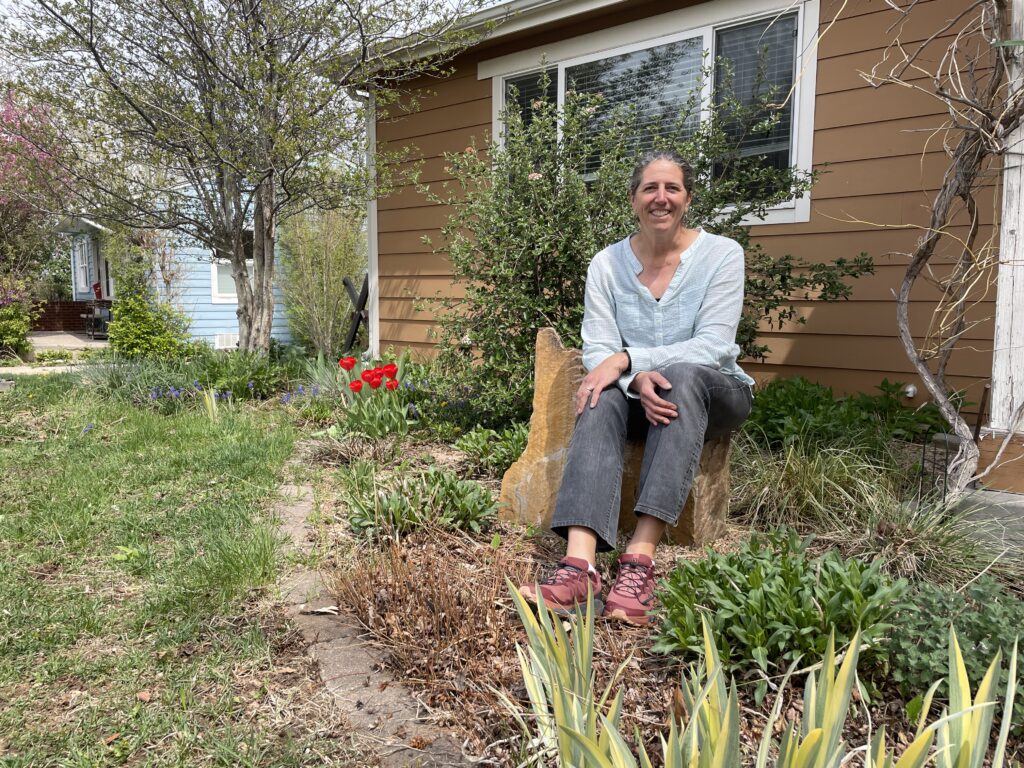
Kerry is opting for the Lawn Removal Service option of the program, meaning a Resource Central crew will take out their grass and leave a blank slate for them to work with. They’re not set on any design to replace it just yet, though. “Our biggest challenge will be deciding what to put in! To have two designers in the family, it’s like butting heads sometimes,” she jokes. But whatever design they create, they are happy to build on the benefits of their existing waterwise landscape. They’re saving water, having more fun with maintenance, enjoying the outdoors, and even building community. “One of the parts we do with cleanup is plant spread. If there isn’t space, we dig it up, pot it, and give it away to neighbors and stuff like that.”
Kerry has a few tips for beginning gardeners that she wanted to share. First, try out a small project — a side yard or border area — and see how it goes. She suggests starting with a Garden In A Box kit, too, something many of her neighbors have done over the years as an easy way to get started. Finally, she adds that you don’t need to be afraid to move a plant if it’s struggling. “It’s something good to Google, but they can be so tolerant if you water it well and watch it.” She admits this extra effort and experimentation might not be for everyone, though.
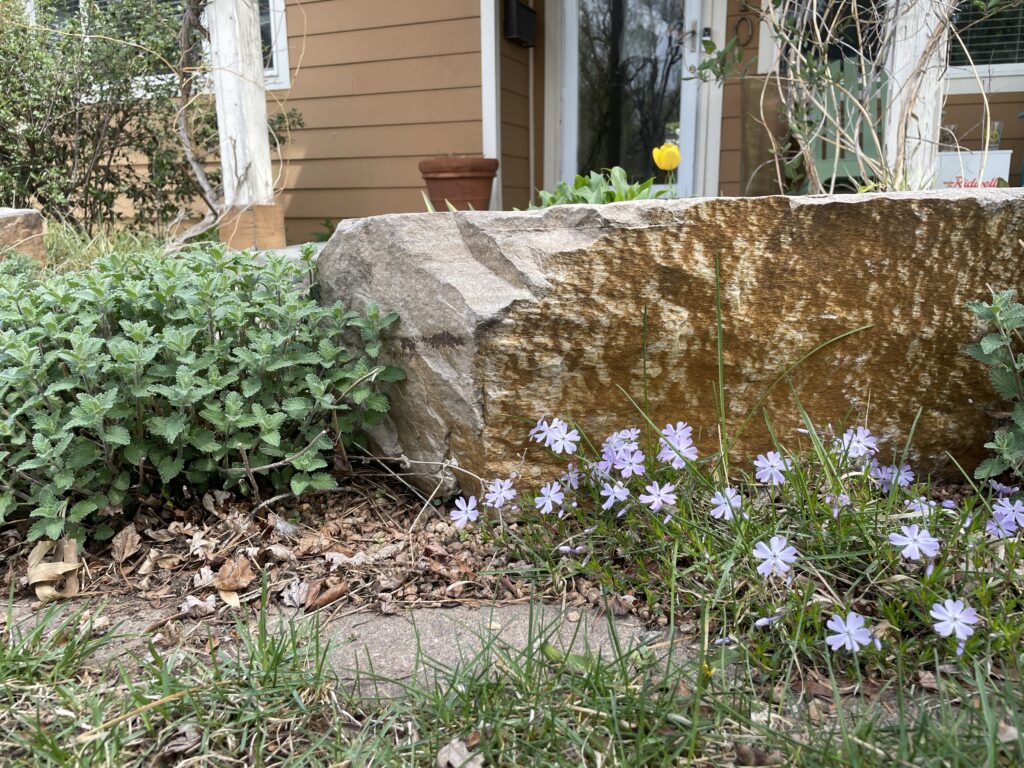
I’m excited to see how this project turns out later this year and plan on returning to see the end result. If it’s anything like their yard so far, I’m sure it’ll be amazing. Thanks for tuning in, folks!
-Garrett
En Resource Central, creemos que juntos podemos construir un Waterwise (de bajo consumo de agua) resiliente y Waterwise (de bajo consumo de agua) mediante acciones locales a gran escala.
Las personas que aparecen en esta serie de entradas del blog no son más que una pequeña muestra de todo lo que están haciendo tantos habitantes de Colorado para avanzar hacia ese objetivo. Así que, tanto si acabas de empezar a mejorar tu eficiencia hídrica, como si eres un jardinero con experiencia en el cultivo con bajo consumo de agua, o si estás leyendo este blog y descubres por primera vez Waterwise (de bajo consumo de agua) , gracias por unirte a nosotros para crear un Waterwise (de bajo consumo de agua) más Waterwise (de bajo consumo de agua) .
¿Te interesa compartir tu historia o conoces a alguien que sería ideal para aparecer en nuestra sección? Envíame un correo electrónico con los detalles!