
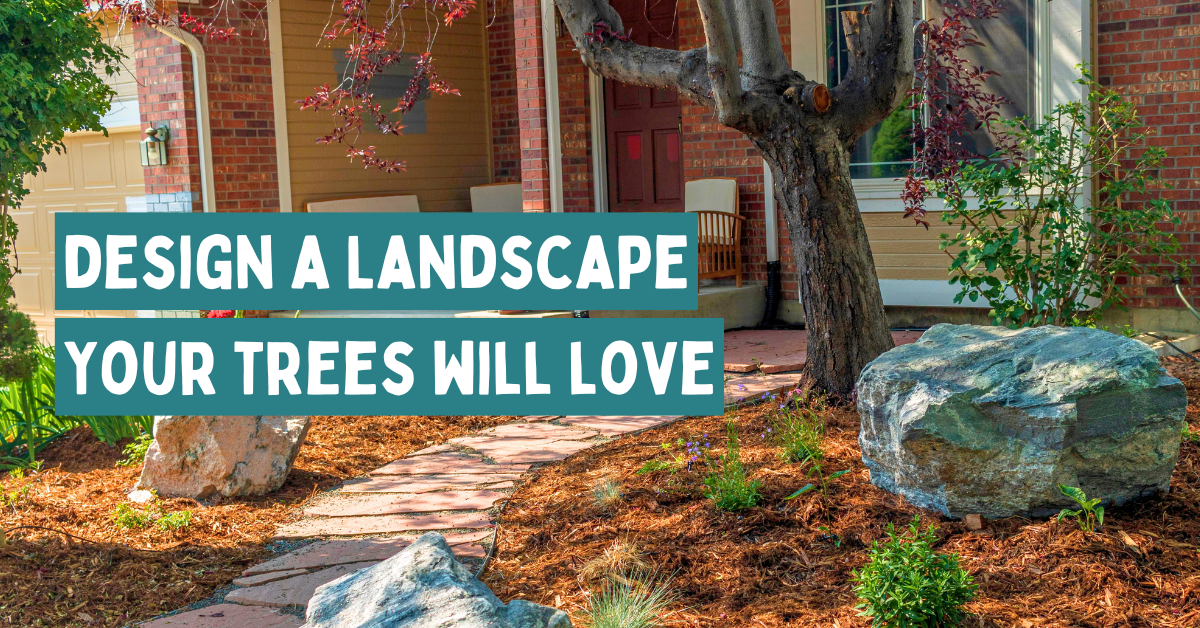
You’ve probably seen it: a front yard with a young tree planted right in the middle—and a big, empty ring of lawn beneath it. It’s one of the most common questions we hear: what can I plant under my tree?
In Colorado’s urban and suburban landscapes, trees, lawn, and ornamental plants are often combined into what CSU Extension agent Alison O’Connor calls “mixed-use landscapes.” Trees have become an essential part of these spaces, shaping how our yards look, feel, and function.
As more Coloradans rethink their lawns and move toward waterwise landscaping (or ColoradoScaping as it’s sometimes referred to as), trees shouldn’t be an afterthought—they should be a starting point. A better question to ask might be: how do I support my trees while transitioning from irrigated lawn to low-water gardens?
Let’s get into it.
Why Trees?
Trees are often considered the highest-value plant in your landscape—and for good reason.
They provide shade that cools your home and yard, reduce evaporation, and create microclimates that make it easier for other plants to thrive. They support birds, pollinators, and wildlife, and contribute to a more connected, resilient urban canopy. Research highlighted in Mikl Brawner’s article Trees for a Changing Climate & Resilient Urban Forest for Cool Boulder shows that trees play a critical role in helping our communities adapt to rising temperatures and more extreme weather patterns.
They also bring less measurable benefits that are just as important. There are numerous studies about treed neighborhoods increasing residents’ happiness factors, mental and physical health, and even social cohesion!
In waterwise yards, trees can play a vital role, but they do require some important planning and considerations for their success.
Caring for Existing Trees as You Transition to Waterwise
Whether you’re refreshing a portion of your yard or tackling a full lawn replacement, it’s important to design with your trees, not around them as an afterthought.
Start here: While this blog post will only touch on the high-level considerations for trees in your yard, many of the detailed guidance will be covered in these two YouTube recordings of our Waterwise Yards Seminars. We encourage you to use the time stamps provided in the video descriptions to skip ahead to the topics of interest to you.
- Trees and Waterwise Landscaping with Eric Hammond from 2025 covers low-water tree varieties for CO, and proper planting and watering techniques
- Caring for Trees in Waterwise Landscapes with Alison O’Connor from 2026 covers how to care for and prioritize trees in mixed-use landscapes, including managing competition with turf, best practices for mulching and watering, and how to support and protect trees during lawn removal projects
Plan for Mixed-Use Irrigation Needs
 Trees, lawn, and low-water gardens have different watering needs—and they can compete for water without proper planning. Generally lawn and trees split the water 50/50 Irrigating your lawn regularly is a great way to water your trees, but as you transition away from lawn and, especially if you’re converting your irrigation system to a drip system, you’ll need to make sure your trees still receive deep, consistent watering. Use the tips below to think about how you’ll support both going forward:
- Use soaker hoses or rings of drip emitters around the tree root zone up to the tree dripline
- Cover 70% of the root zone with drip irrigation
- Dripline = the invisible circle on the ground that matches the outermost reach of the tree’s branches above. The tree roots that absorb water and nutrients are located within this zone.
- Use tubing offering 18″ spacing for emitters
- Consider separate irrigation zones for trees and perennial beds to better control differing irrigation needs
- Or plan to supplement your perennial bed irrigation schedule with hand watering, as needed
- Dig into the nitty gritty math of adapting your system to drip and calculating how much water your trees actually need with this thorough article from the University of Nevada Extension. It is definitely worth a read.
Protect the Root Zone
Tree roots and lawn roots typically share the top 12 inches of soil, which means lawn removal projects can disturb tree roots.
- Avoid cutting or trenching through major roots
- Minimize heavy digging near the base of the tree
- Add mulch around the tree base retain soil moisture and reduce stress
A healthy root system is the foundation of a healthy tree, especially during a landscape transition.
Observe Sun & Shade in your Yard
One of the most important steps is simply paying attention to how tree canopy affects sun exposure across your yard and garden beds.
- Watch how sunlight moves across your yard throughout the day and across seasons
- Understand that deciduous trees create dappled shade, while evergreens create denser shade
- Plan for how conditions will shift as your tree matures
Plants beneath trees must be able to handle not just current conditions but future ones too.
Plan for the Future Landscape
Your yard today isn’t your yard five years from now.
As trees grow, they’ll cast more shade, use more water, and shape the surrounding space. Designing with that future in mind leads to more successful, lower-maintenance landscapes..
As you plan for the future of your yard, it helps to choose plantings that are designed to adapt alongside your trees. For example, our Shades of Summer Garden In A Box kit is built specifically for partial sun conditions (around 4 hours of light)—the kind of environment many front-yard trees create as they mature. With a soft, layered palette of pinks, reds, blues, and golden yellows, this 100 sq. ft. design brings vibrant color to shadier spaces while using hardy, low-water perennials. Even better, the planting maps are designed to help you work around existing trees, making it easier to create a cohesive landscape that evolves over time, instead of competing with it.
Check out the part-shade Shades of Summer garden.
Irrigation & Drought Considerations for Trees
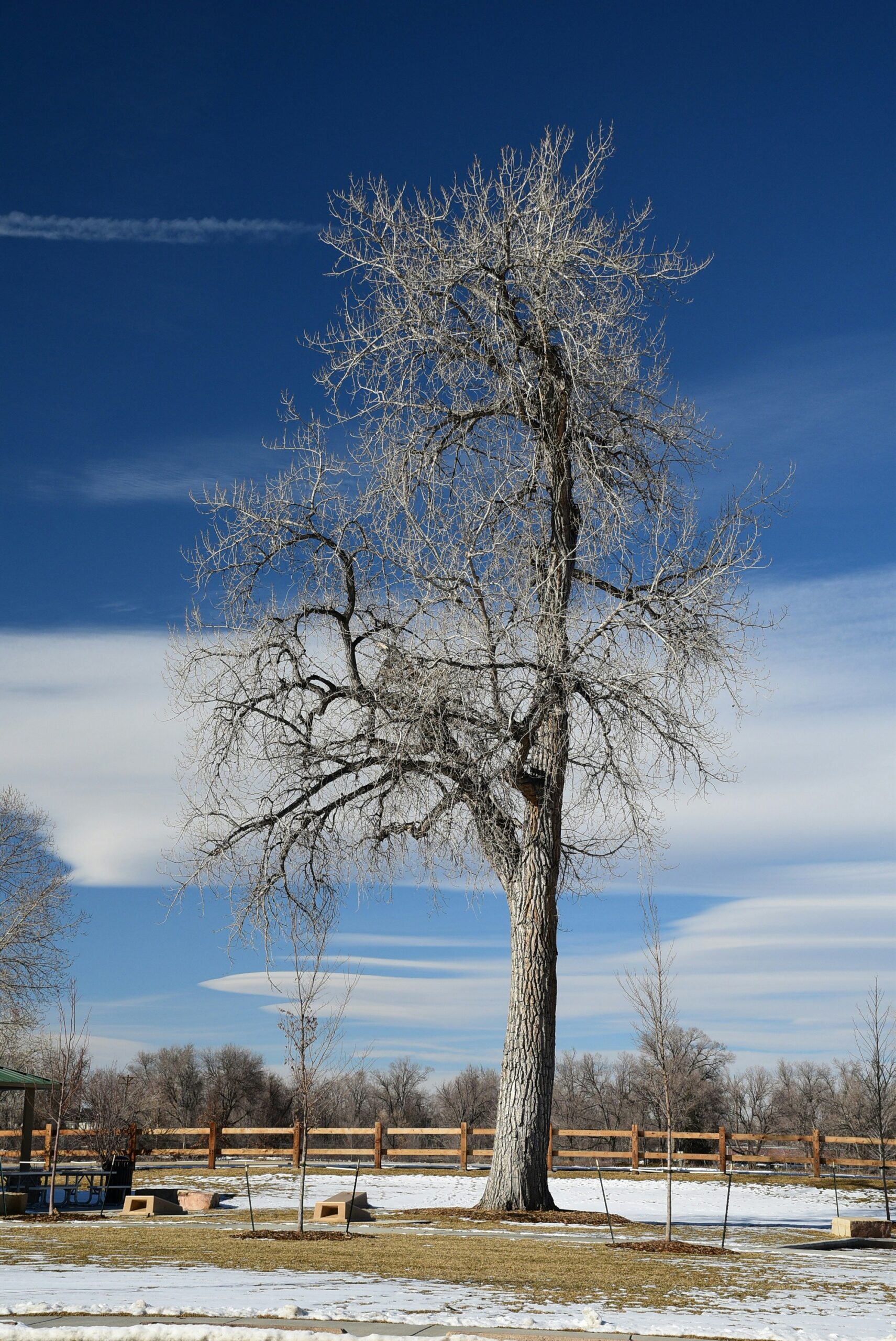 While drought is part of life in Colorado, especially this year, it’s crucial we are prioritizing irrigation needs wisely and in compliance with any watering restrictions.
According to this CSU Extension’s article, during drought conditions:
- Trees should be prioritized, especially newly planted or young trees
- Trees require deep, infrequent watering to stay healthy
- Even established trees benefit from supplemental watering during extended dry periods
Newly planted trees are particularly vulnerable and may require regular watering for several years to fully establish. This is true even for drought-tolerant species.
In many cases, it may make more sense to scale back lawn watering while continuing to support trees and key landscape plants. During drought, watering everything equally isn’t the goal—watering what matters most is.
Bringing It All Together
Transitioning to a waterwise yard doesn’t mean starting from scratch, it means working with what you already have.
Trees provide structure, shade, and long-term value to landscapes. By protecting their roots, planning for their needs, and designing thoughtfully around them, you can create a landscape that’s not only more water-efficient, but more resilient, dynamic, and enjoyable for years to come.
References & Resources
- Trees for a Changing Climate & Resilient Urban Forest
https://www.coolboulder.org/news/trees-for-a-changing-climate-resilient-urban-forest - Trees for Colorado Landscapes with Eric Hammond (2025)
https://www.youtube.com/watch?v=APwfRDITqVg - Caring for Trees in a Waterwise Landscape with Alison O’Connor (2026)
https://www.youtube.com/watch?v=rA-i3jA3mPM - Watering Trees in Hot, Dry Landscapes (University of Nevada, Reno) – Talks you through how to calculate how much water your trees need.
https://extension.unr.edu/publication.aspx?PubID=5109 - Watering a Home Landscape During Drought (CSU Extension)
https://extension.colostate.edu/resource/watering-a-home-landscape-during-drought/