
When you’re ready to replace part of your lawn with a beautiful waterwise yard, the first step is choosing the right lawn removal method for your space, timeline, and comfort level. Some approaches are faster but more labor-intensive, while others take more time but require very little physical effort. Whether you’re starting with a small patch of traditional turf grass or a larger transformation, there’s a method that can help prepare your landscape for healthy, low-water plants.
Below are three of the most effective lawn removal methods, along with their benefits, challenges, and step-by-step instructions to help you get started. If you’d like some help with your waterwise landscape, Resource Central’s Lawn Replacement program can help with discounted removal services and our Garden In A Box kits make it easy to conserve water by planting a professionally-designed low-water landscape.
Method 1. Sheet Mulching / Lasagna Method
This cost-effective and environmentally-friendly approach uses recycled newspaper or cardboard and doesn’t require removing the existing grass. In fact, putting down newspaper or cardboard and covering it with dirt to smother the grass helps with efficient soil enrichment and home composting, by creating a nutrient-rich soil for a thriving waterwise garden.
A Good Method for
- Great fit for participants in Resource Central’s Do-It-Yourself Lawn Replacement option
- Smaller lawns, parking strips, and around tree
- Homeowners want to take a hands-on approach to building healthy soil over time
Benefits
- Cost-Effective – Smother your grass by covering it with recycled newspaper or cardboard, without a hefty price tag
- Minimal Labor – Let time and nature do the work
- Low Environmental Impact – Embrace a sustainable approach to lawn care
- No Sod Removal/Disposal – Skip the hassle of removing or disposing of sod
- Rich Soil – Build nutrient-rich soil for healthier plant growth
- Home Composting – Create space for convenient home composting
Challenges
- Slower Process – Takes about 6 to 8 months, best to start in the fall
- Weeds – This method can promote weed growth
- Not for Steep Slopes – Best for flat surfaces
- Not for Large Lawns – Ideal for smaller areas
Concerned about newspaper ink? Most newspaper inks are soy-based and safe for your lawn. Check with your paper provider if you’d like additional peace of mind!
How to Layer Your Lawn using the Sheet Mulching Method
Step 1: Prep the Lawn
Start in the fall and cut your grass as short as possible. This helps the newspaper or cardboard lay flat and stay in place.
Step 2: Add Compost
Spread a 2-inch layer of nitrogen-rich compost over the area and water it well.
Step 3: Block the Sunlight
Cover the lawn completely with overlapping cardboard or 10 to 12 sheets of newspaper. Be sure there are no gaps where sunlight can sneak through.
Step 4: Water the Layer
Lightly water the cardboard or newspaper so it stays in place and begins to decompose.
Step 5: Add More Nutrients
Spread another 2-inch layer of compost on top.
Step 6: Build Organic Matter
Top the area with up to 18 inches of organic material such as leaves, grass clippings, straw, manure, or food scraps. Over time, this layer will naturally shrink as it breaks down.
Step 7: Finish with Mulch
Add a 4-inch layer of mulch to help retain moisture and complete the bed.
Step 8: Let Nature Do the Work
Water occasionally to support decomposition through the fall and winter months.
Step 9: Plant Your Garden
By fall, your new waterwise garden area will be ready for planting.
Method 2. Solarization Method
Solarization uses the sun’s heat to naturally kill grass beneath a sheet of black plastic. Think of it as creating a temporary solar-powered oven for your lawn. This method works especially well in hot, sunny areas and requires minimal physical labor.
For homeowners participating in the Do-It-Yourself Lawn Replacement program, solarization can be a helpful low-labor option for sunny areas that are not immediately ready for planting.
Benefits
- Efficiency – Transform your lawn without extensive effort
- Cost-Effective – Achieve a beautiful garden without a hefty price tag
- Minimal Labor – Let nature do the work
- Low Environmental Impact – Use the sun instead of chemicals
- No Sod Removal/Disposal – Skip hauling away sod
- Composting – Dead grass can become compost
- Sunny Areas – Works well in hot, sunny conditions
Challenges
- Really Slow Process – Can take anywhere from 4 weeks to a year
- Unsightly – Black plastic may not blend into the landscape
- Not for Steep Slopes – Best for flat surfaces
- Shady Areas – Less effective in cool or shaded locations
Using the Sun to Remove Your Lawn
Step 1: Start at the Right Time
Begin the solarization process in late spring or early summer. In Colorado, this is typically May or early June.
Step 2: Prepare the Grass
Cut the grass as short as possible and water it thoroughly before covering it.
Step 3: Cover the Area
Place black polyethylene plastic over the lawn area and secure it tightly with rocks or metal stakes. Make sure the sheet is airtight with no holes or gaps.
Step 4: Let the Heat Build
The plastic traps the sun’s heat, warming the top 6 inches of soil to around 140°F and killing the grass beneath it. A soil thermometer can help you monitor temperatures if desired.
Step 5: Wait for the Process to Work
Leave the plastic in place for 4 to 8 weeks, or until the grass is fully dead.
Step 6: Remove the Plastic
Once the grass is dead, remove the plastic and allow the grass to compost naturally.
What Comes Next?
After solarization, you have a few options:
- Follow the steps for the Sheet Mulching Method (except step 6) and plant right away.
- Begin planting immediately, but avoid disturbing soil deeper than 2 inches to reduce weed growth.
- Wait until the next growing season to plant.
Method 3. Physical Removal
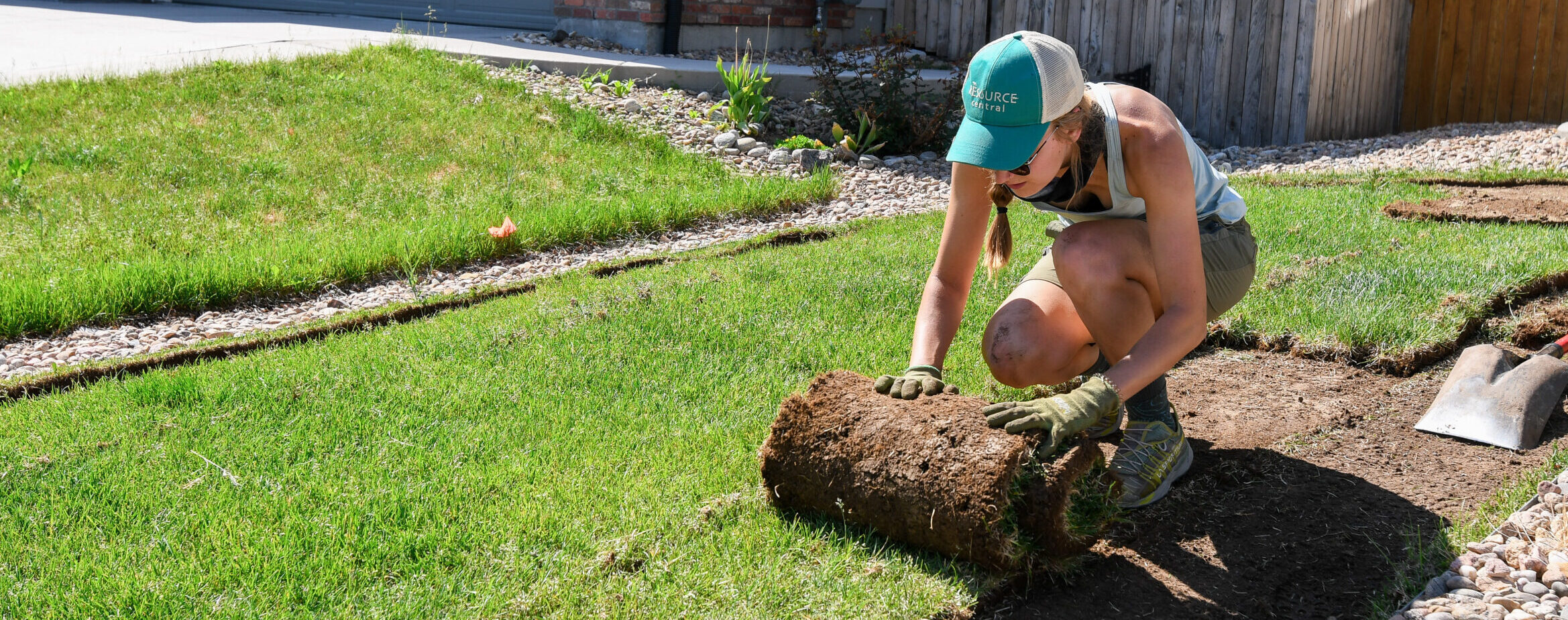
This is a method of physically removing your lawn with a sod cutter or manually with a square shovel or grape grubbing hoe.
If you’re planning a larger lawn transformation or want to skip the physical labor, our Removal Service can help take the heavy lifting off your plate by professionally removing turf and preparing your space for a waterwise transformation.
Benefits
- Quick – Fastest method for lawn removal
- Compost – Removed sod can become compost
- Top Soil – Leaves most of your soil intact
- Get Fit – Manual removal provides a solid workout
- Large Areas – Effective for areas larger than 100 square feet
Challenges
- Labor-Intensive – Requires significant physical effort
- Regrowth – Grass may regrow from leftover roots or clippings
- Deep Roots – Not ideal for grasses with deep root systems, such as Bermuda grass
- Equipment Rentals – Sod cutters often need to be rented
Digging Up Your Lawn: A Simple Breakdown
Step 1: Choose Your Removal Method
Decide whether you want to use a sod cutter or remove the lawn manually with a square shovel or grape grubbing hoe. As a general rule, two people can manually remove and haul away about 100 square feet of lawn in one hour.
Step 2: Rent Equipment if Needed
If you choose to use a sod cutter and do not own one, rent one from a local tool supplier.
Step 3: Remove the Sod
Using a sod cutter: Cut the sod into strips, roll them up, and remove them from the area.
Using a shovel or hoe: Dig deeply enough to remove the roots completely. Root depth can vary depending on the type of grass.
Step 4: Prep for Planting
Add compost to enrich the soil and prepare your new garden area for planting.
Step 5: Prevent Future Weeds
Consider solarizing the area afterward to help eliminate any weeds that may remain in the soil.
Choosing the Best Method for Your Yard
Each lawn removal method offers different advantages depending on your goals, budget, and timeline. If you’re looking for the most environmentally friendly option with rich soil benefits, sheet mulching may be the right fit. If you prefer a low-effort approach and have a sunny yard, solarization can work well. For the quickest transformation, physical removal delivers immediate results, especially for larger spaces.
No matter which method you choose, removing turf is an important first step toward creating a more resilient, waterwise landscape that supports long-term conservation and healthier outdoor spaces. And whether you want to tackle the project yourself or work with professionals, our Lawn Replacement program can help make the transition easier from start to finish.