
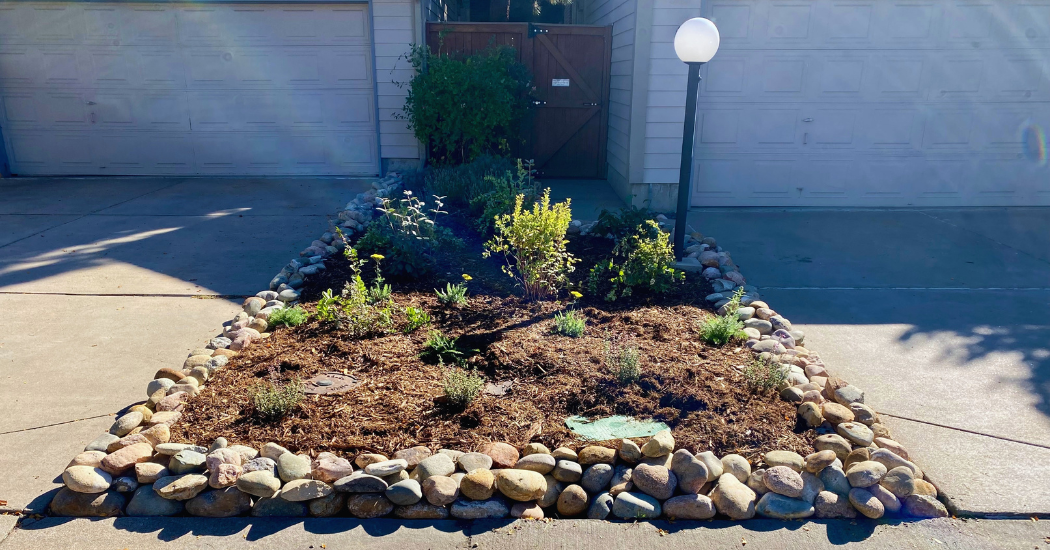
Colorado just experienced a record-breaking summer. 2026 was officially the hottest and 22nd driest summer on record for Colorado. If these conditions continue, keeping turf grass green can mean more water, more maintenance, and more work. One long-term way to make your yard more resilient? Reduce the amount of lawn you have to maintain.
But that does not mean you need to remove your entire lawn all at once. In fact, choosing where to remove turf is an important part of the replacement process.
Start with your sprinkler system
Before you start digging, check how your yard is irrigated.
Your sprinkler system is divided into zones, with each zone controlling a group of sprinkler heads. Removing turf without considering those zones can leave you with sprinklers watering plants that would be happier on drip irrigation, or make it difficult to water the grass you want to keep efficiently.
When looking for a good area to convert, start with a sprinkler zone that is:
- An entire irrigation zone. Converting a whole zone is generally simpler than removing only part of one.
- Self-contained. Look for a zone that waters one distinct and no parts of it are partially watered by any other zones.
- Mostly nonfunctional turf. Decorative strips, awkward corners, and grass that rarely gets walked or played on can be great candidates.
- Free of established trees. Mature trees may rely on water currently supplied by your lawn irrigation, so their water needs should be considered before making changes.
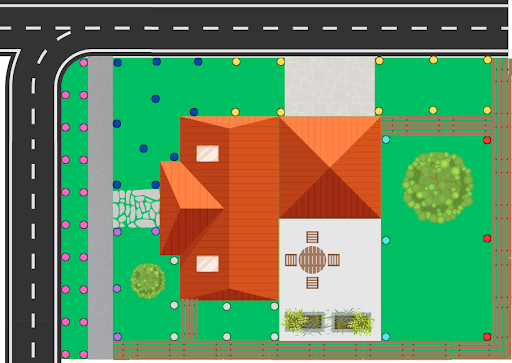
In the graphic above, the different colors represent sprinkler heads in different irrigation zones. The pink zone is an ideal candidate for lawn replacement. It covers one distinct strip of grass without overlapping other zones; the area is too small and narrow to be useful for recreation or gathering, and there are no trees relying on its irrigation.
The red and light blue zones, on the other hand, are better candidates for keeping as turf. They are located in a backyard where kids play, the sprinkler coverage overlaps, and the zones provide water to a mature tree.
Think about how you actually use your lawn
Not all grass serves the same purpose.
That patch where kids play, the dog runs, or friends gather may be worth keeping for a bit. The narrow strip along the driveway that nobody ever steps on? Maybe not.
Consider aesthetics, sun exposure, nearby plants and trees, HOA requirements, how you use the space, and, of course, your irrigation system.
What should replace your grass?
Once you have found the right area, you get to decide what comes next. There are plenty of options beyond traditional turf.
Waterwise gardens can bring seasonal color to your yard while providing food and habitat for pollinators. Native or low-water grasses and alternatives like clover can work well in areas where you still want a softer, walkable surface. Shrubs can add structure, privacy, and erosion control, while groundcovers can create an attractive transition between remaining lawn, garden beds, and other landscape features.
Not sure where to begin? We can help.
If you are wondering whether your sprinkler system is ready for a landscape change, Resource Central’s Slow the Flow program can help you better understand how your irrigation system is performing and identify opportunities to water more efficiently.
And when you are ready to take the next step, our Lawn Replacement program can help make removing thirsty turf easier.
You do not have to transform your entire yard, especially all at once. Starting with one thoughtfully chosen section of lawn can be a practical first step toward a more waterwise yard.
Ready for inspiration? Explore our Waterwise Yards resources for ideas, how tos, and landscape guidance, or check out CSU Extension PlantTalk’s Lawn Conversion resources to learn more about transforming turf in Colorado.