
Colorado’s hot, dry winter was unfortunately followed by a hot, dry summer. As of September 1, 75% of the state was experiencing severe to exceptional drought.
In response, many Colorado water providers like Denver Water, the City of Arvada, and Willows Water District implemented stricter watering guidelines this season. These providers are setting an October 1 cutoff for lawn watering.
Not sure about the water regulations where you live? Check your water provider’s current guidelines before making your fall lawn-care plans. You can find general recommendations using Resource Central’s provider search tool or review ACA Landscape’s helpful guide.
If drought restrictions mean less water for your lawn this fall, don’t worry: doing less can actually be the best thing for drought-stressed grass.
5 Ways to Care for Your Lawn During Drought
1. Skip chemical fertilizer
Fertilizing dry or dormant grass isn’t very effective, and encouraging additional growth during a drought can increase your lawn’s water needs.
Instead, leave grass clippings on your lawn after mowing. They can help shield exposed soil from the sun while returning nutrients to your lawn naturally.
2. Hold off on overseeding
Successful overseeding requires consistent watering, often two to three times per day for about a month, which can be difficult to do during drought conditions. Some communities may also require a permit for overseeding.
If you absolutely need to seed a small, specific area, consider watering it by hand with a hose rather than running your entire sprinkler system.
3. Mow less often at a high setting
Let your lawn grow a little longer than usual. Aim to keep grass around 3 to 3.5 inches tall, and wait to mow until it reaches roughly 4 to 4.5 inches.
Taller grass shades the soil, which can help reduce moisture loss and protect your lawn during hot, dry conditions.
4. Limit foot traffic
Drought-stressed grass is already working hard to survive. Frequent walking, equipment, or other heavy traffic can add additional stress and damage.
When possible, give dry or dormant areas of your lawn a break.
5. Keep weeds under control
Weeds compete with your grass, and the rest of your landscape, for water. Continue pulling weeds as needed throughout the fall so the water you do use goes to the plants you want to keep.
Don’t Forget About Your Trees, Shrubs, and Perennials
A lawn-watering cutoff doesn’t necessarily mean you have to stop watering your entire landscape.
Many fall watering restrictions apply specifically to turf grass, which means drip irrigation and hand or hose watering may still be allowed for trees, shrubs, and perennial plants. Always check your water provider’s specific guidelines first.
Trees are especially important to monitor during prolonged dry conditions. One option is deep-root needle irrigation, which delivers water below the soil surface and closer to a tree’s roots while reducing evaporation and water waste.
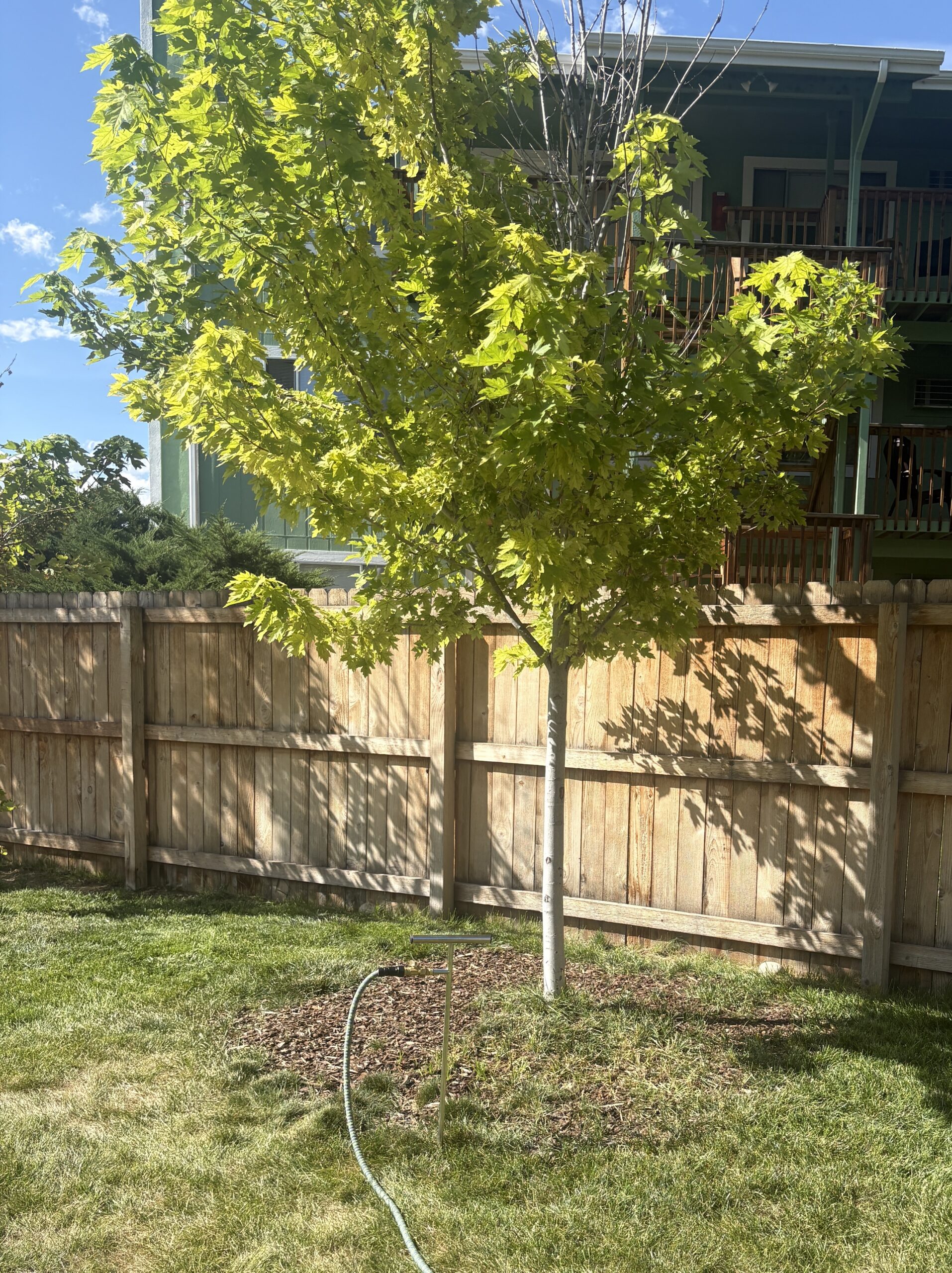
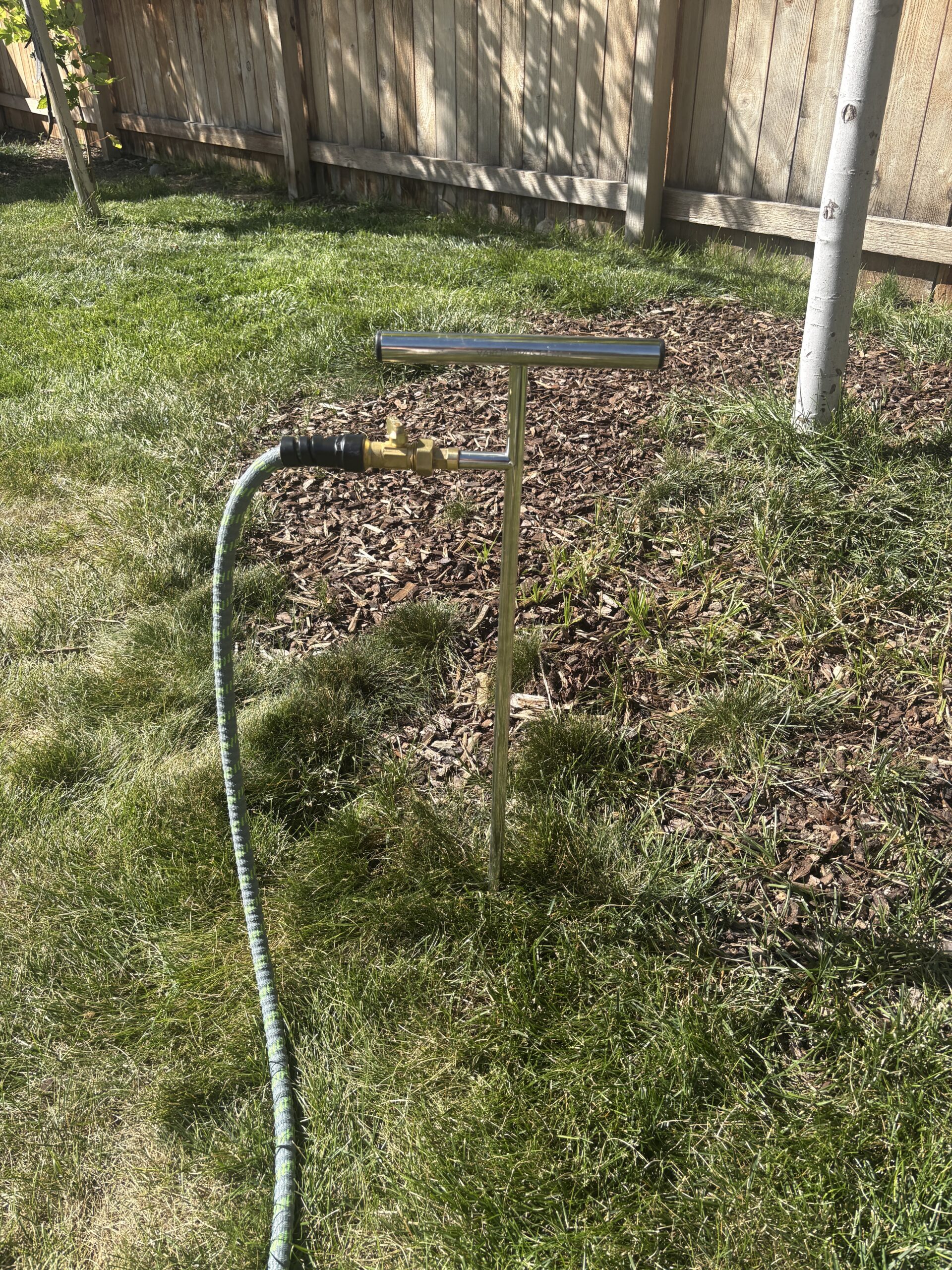
To deep-water a tree with a root-watering needle:
- Connect the needle to an outdoor hose.
- Turn the water on to a slow trickle.
- Insert the needle about 4–6 inches into the soil at several locations around the tree’s drip line.
- Water each location for approximately 15–20 minutes.
- Repeat about every 2–4 weeks, adjusting for weather conditions and the needs of your tree species.
- Before inserting the needle, make sure you know where sprinkler lines, utilities, and rocky areas are located to avoid puncturing anything.
A Dry Fall Can Be an Opportunity to Rethink Your Landscape
Drought conditions can make lawn care challenging, but they can also be a good reminder that a healthy Colorado landscape doesn’t have to depend on keeping every square foot of turf green.
This fall, focus on protecting the plants that need water most, reducing unnecessary stress on your lawn, and following your water provider’s guidelines. And if maintaining thirsty turf is becoming more work than it’s worth, it might be the perfect time to start thinking about what else that space could become.
A smaller lawn, low-water plants, and a landscape designed for Colorado’s climate can help you use less water while creating a yard you’ll enjoy for years to come. Check out our water programs at Resource Central if you’re looking for waterwise yard inspiration.