
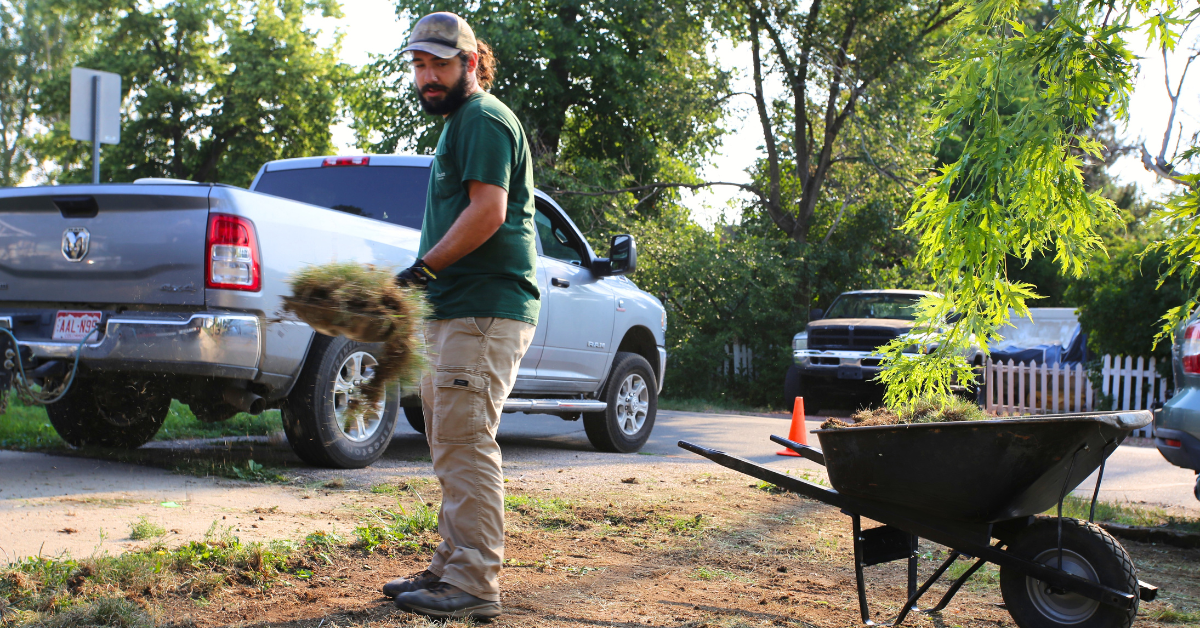
July is Smart Irrigation Month, and at Resource Central, we’re reminding homeowners that watering efficiently, not more, is one of the easiest ways to conserve water. If you’re participating in our Lawn Replacement Program, smart watering is an important part of setting your project up for success.
If you’re planning to replace your lawn with a beautiful waterwise landscape, you might think the first step is to turn off your sprinklers for good.
It might seem logical, but it can actually cause more harm than good.
Even if you have an appointment for our lawn removal service, it’s important to continue regular watering. Keeping your lawn healthy makes it easier to remove, reduces the chance of weeds taking over, and helps ensure your project goes as smoothly as possible. The good news? You can do it in a way that conserves water, follows local watering restrictions, and sets your new waterwise landscape up for success.
The key is to water efficiently, not excessively. One of the best ways to do that is by using the Cycle and Soak method, which helps your lawn get the water it needs while reducing runoff and waste.
Why You Should Keep Watering Before Lawn Removal
It may feel counterintuitive to water grass you’re planning to remove, but removal of healthy grass typically results in a better end result, than removal of patch, dry, or weedy turf.
Weeds Take Over Fast
In Colorado’s semi-arid climate, grass needs regular watering to stay healthy. Many common weeds don’t.
When grass dies from lack of water, it can no longer compete with weeds, giving opportunistic weeds the chance to quickly take over. These weeds establish deep and invasive roots, often thrive in dry conditions, and can spread rapidly across your yard. By the time your lawn removal appointment arrives, weed roots will dig deeper and become more resilient than grass.
That can make the removal process more difficult and lead to a less successful experience for the homeowner.
Healthy Turf Is Easier to Remove
Slightly moist soil makes it easier to lift the turf while minimizing dust and soil disturbance. Think Goldilocks. Not too dry, not too wet, just right. Just remember to stop watering 24 to 48 hours before your appointment so the soil is not too wet.
Once your lawn is removed, you’ll have a clean slate that’s ready for your new waterwise landscape.
How to Water Your Lawn the Waterwise Way
Keeping your lawn healthy until removal doesn’t mean using more water. It means using the right amount of water in the most efficient way possible.
Here are a few best practices to help you water wisely:
- Water early in the morning or late at night. This reduces evaporation and gives your lawn time to absorb moisture before the heat of the day.
- Use the Cycle and Soak method. Breaking your watering into shorter cycles allows water to soak into Colorado’s clay soils instead of running off.
- Water only when your lawn needs it. Avoid watering after a good rain, and adjust your schedule as temperatures change.
- Check your sprinkler system regularly. Look for broken heads, leaks, or sprinklers that are spraying sidewalks or driveways instead of your lawn. We can do this for you with our free sprinkler evaluations.
- Follow your local watering restrictions. Watering restrictions vary by community, so be sure you’re following your water provider’s guidelines.
Use the Cycle and Soak Method
One of the best ways to water turf in Colorado is with the Cycle and Soak method.
Instead of watering your lawn all at once, divide your total watering time into several shorter cycles with breaks in between. This gives the water time to soak into the soil, reducing runoff and evaporation while encouraging deeper root growth.
Why Cycle and Soak Works in Colorado
Colorado soil absorbs water slowly. When sprinklers run continuously, water often:
- Runs off sidewalks and driveways
- Pools in low spots
- Grow mildew or fungus
Example Sprinkler Schedule
Let’s say you have four sprinkler zones, and each zone needs a total of 15 minutes of watering.
Instead of running each zone for 15 minutes straight, set your controller to water in three 5-minute cycles.
Start Time #1
4:00 a.m.
Zones 1-4 run for 5 minutes each
Start Time #2
4:30 a.m.
Zones 1-4 run for 5 minutes each
Start Time #3
5:00 a.m.
Zones 1-4 run for 5 minutes each
If you adjust a zone’s run time, remember to adjust each cycle equally so your total daily watering time stays consistent.
What About Drip Irrigation?
The Cycle and Soak method is only necessary for sprinkler zones that water turf grass.
Drip irrigation applies water much more slowly, allowing it to soak into the soil naturally. Drip zones typically do not need multiple watering cycles.
Sprinkler Systems 101
Not sure if your sprinkler system is watering efficiently?Our free Slow the Flow sprinkler evaluation help you make a few small adjustments that can make a big difference.
- Identify broken or inefficient sprinkler heads
- Reduce water waste from overspray and runoff
- Program your controller for maximum efficiency
- Receive a customized watering schedule for your landscape
Whether you’re preparing for lawn replacement or simply looking to save water, understanding how your sprinkler system works can help you keep your landscape healthy while using less water.
Learn more and sign up for a free Slow the Flow sprinkler evaluation.
Ready for a Waterwise Yard?
Replacing even a portion of your lawn with a waterwise Garden In A Box kit can save an average of 15,000 gallons of water each year while creating a landscape that’s beautiful, resilient, and easier to maintain.
Don’t stop watering just yet. Keeping your lawn healthy until your removal appointment makes the process easier, discourages weeds, and gives your new waterwise landscape the best start possible.